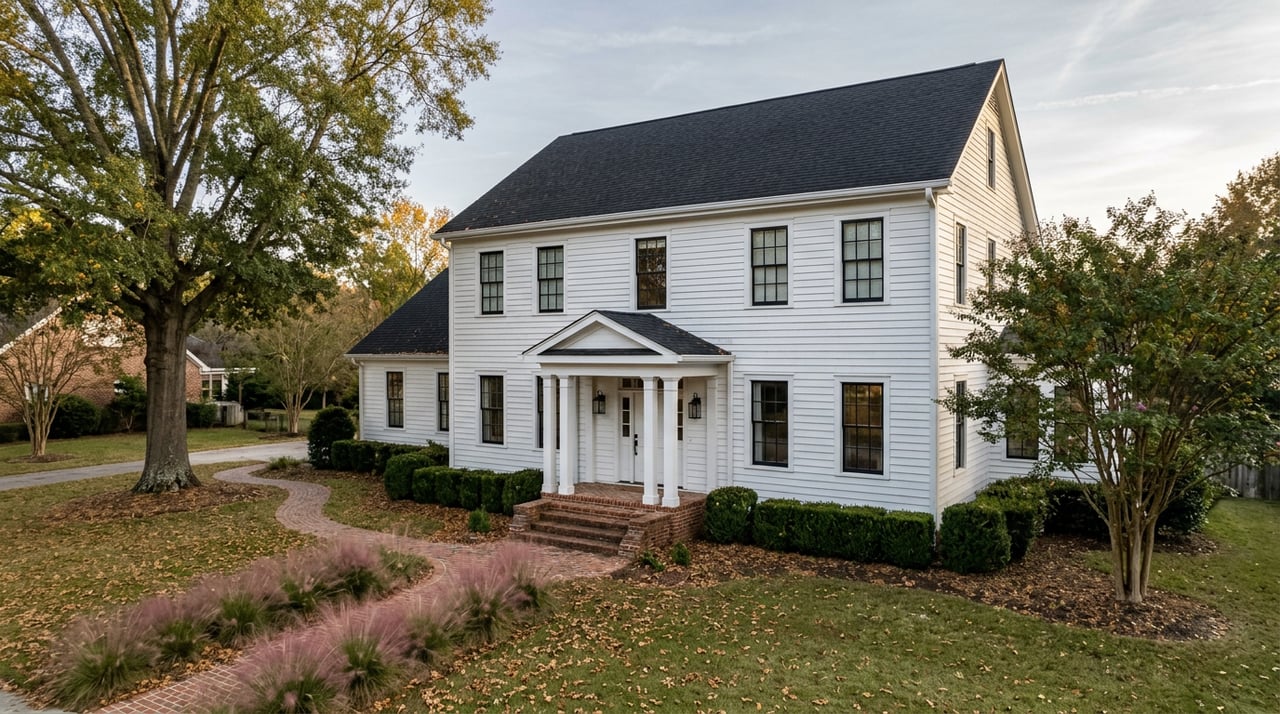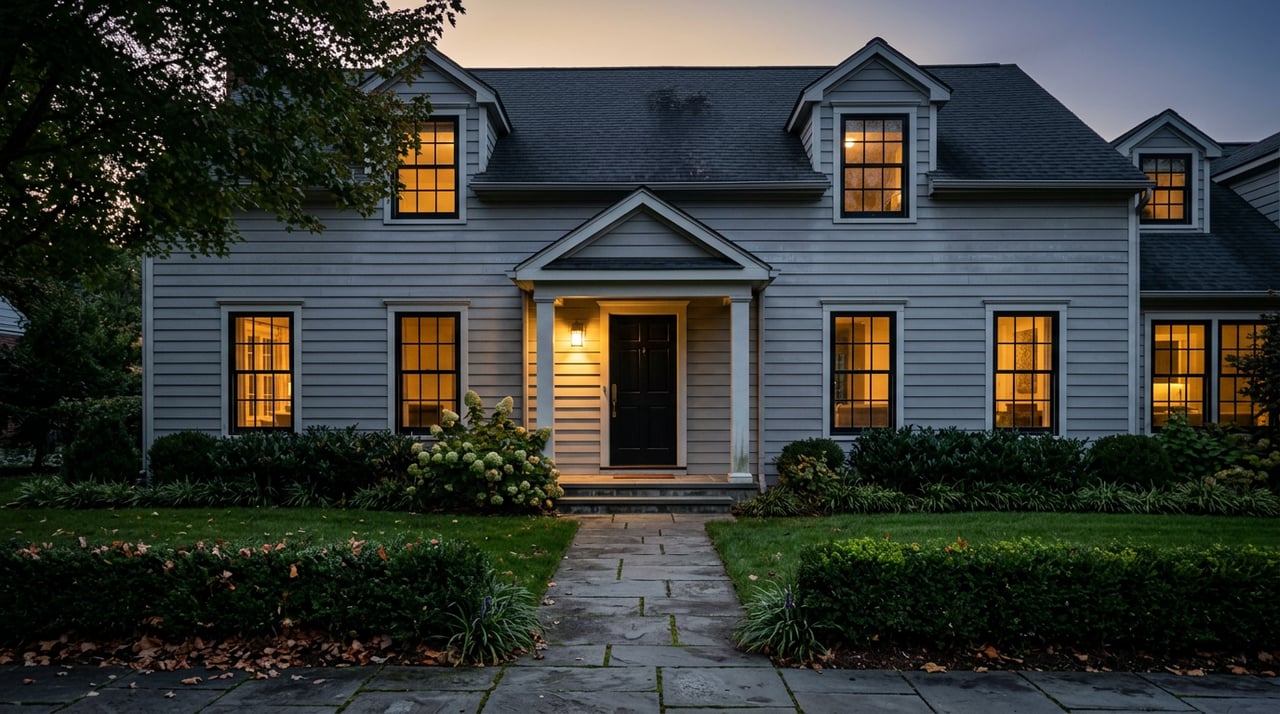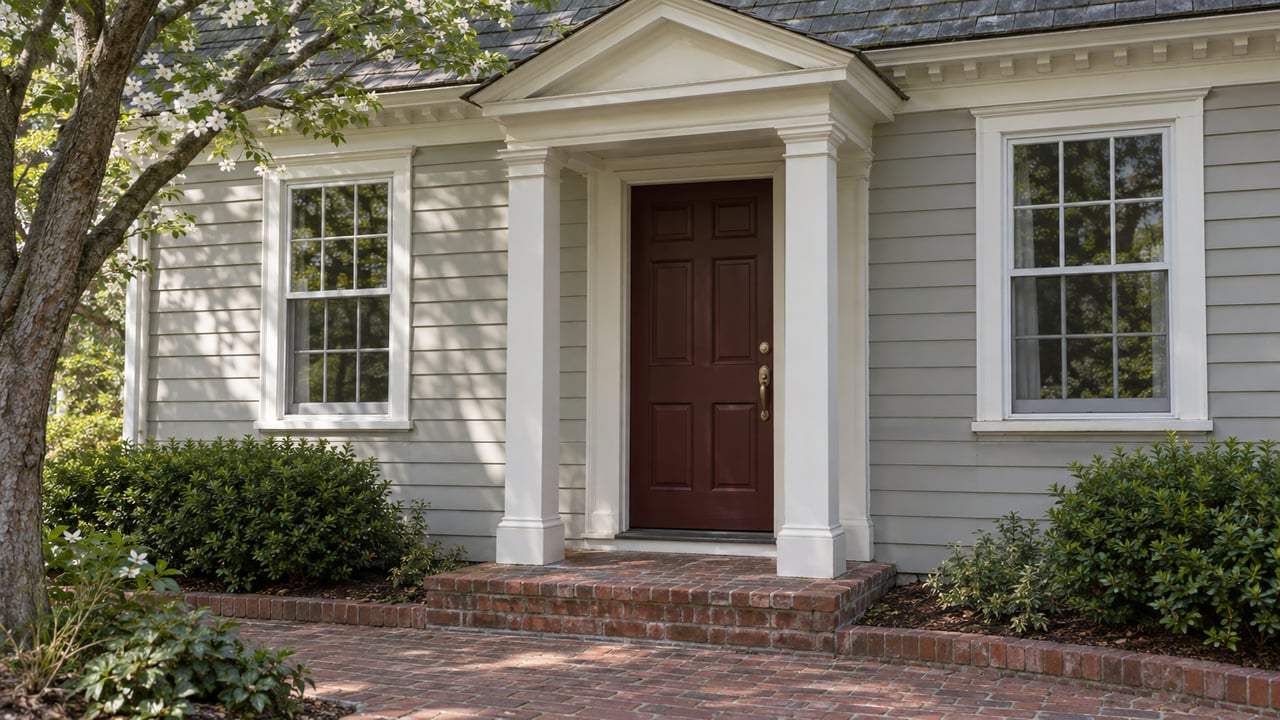
Two houses go under contract the same week. Both are pre-1940, both sit inside the Beltline, both close in thirty days flat. The buyer in one house spends the weekend after closing swapping out failing windows. The buyer in the other submits an application, waits for a monthly meeting, and finds out in four to eight weeks whether the windows she already bought are the right windows.
Same era. Same due diligence process. Completely different clock running underneath.
That second clock is the part of buying an older Raleigh house that rarely shows up in the listing description, the inspection report, or even the closing disclosure. It has nothing to do with what's wrong with the house and everything to do with what you're allowed to do to it once it's yours.
What due diligence actually buys you
North Carolina's standard purchase contract runs on a due diligence period rather than a traditional inspection contingency. The buyer pays the seller a negotiated due diligence fee to take the property off the market. That fee is non-refundable if the buyer walks away, but it's credited toward the purchase price at closing. As of this fall, due diligence fees in the Raleigh market are running anywhere from $1,000 to $10,000 or more, depending on price point and how much competition the listing is drawing.
During that window, which usually runs fourteen to twenty-one days, the buyer can order every inspection they want, negotiate repairs with the seller using NC Form 310-T, or terminate the contract for any reason and keep their earnest money. A general home inspection in the Raleigh area currently runs $350 to $550. Add a radon test for roughly $100 to $200, a termite inspection for $65 to $125, and a crawl space or sewer scope if the systems look older, and a buyer should budget $850 to $2,500 for a full inspection package on a typical Triangle house.
This period is genuinely protective. It's also, and this is the part that matters, entirely about the condition of the house as it exists right now. It says nothing about what you're permitted to change after you own it.
"Historic" is a description. Historic Overlay District is a zoning line.
Raleigh currently recognizes eight local Historic Overlay Districts: Blount Street, Boylan Heights, Capitol Square, Glenwood-Brooklyn, Moore Square, Oakwood, Oberlin Village, and Prince Hall. These are legally established zoning overlays, not a marketing category. If a property sits inside one of them, or carries an individual Raleigh Historic Landmark designation, any exterior change (new siding, a fence, a replaced window, an addition, even repainting in some cases) requires a Certificate of Appropriateness before work begins, whether or not the project also needs a standard building permit.
The city's own guidance tells owners to check iMAPS before assuming a property does or doesn't carry that requirement, because plenty of genuinely old, genuinely charming ITB streets sit entirely outside the eight designated districts. Hayes Barton, Budleigh, and Drewry Hills near Five Points are consistently described as some of the most established pre-war streets inside the Beltline, and none of them are on the list of designated overlay districts. A 1930s house there and a 1930s house three blocks away in Boylan Heights can look like architectural siblings and face entirely different renovation clocks.
Minor, Major, and a meeting you only get once a month
Not every Certificate of Appropriateness moves at the same speed. A Minor Work COA gets reviewed administratively by city preservation staff and can move relatively fast. A Major Work COA, the category for anything more substantial or potentially precedent-setting, goes to the Raleigh Historic Development Commission's COA Committee, a quasi-judicial body that meets on the fourth Thursday of each month at 5 p.m., with November and December folded into a single early-December session.
Miss the cutoff for that month's agenda and the wait is another month, not another week. Site plan guidance for Raleigh residential projects puts RHDC review at an additional 30 to 60 days layered on top of the standard 10 to 15 business days most residential permits take to clear plan review. For a buyer who closed expecting to start exterior work right away, that's the gap between a moving checklist and a stalled one.
The process itself isn't static either. As of January 2, 2026, the city put a new set of changes into effect under text change TC-3-24, intended to align the COA process with state law and streamline parts of the review. Anyone relying on a description of the process written even a year ago should confirm the current rules directly with the Raleigh Historic Development Commission rather than assume last year's version still holds.
What due diligence does catch in this housing stock
None of this means the due diligence period is doing nothing for buyers of older homes. It's doing exactly what it's designed to do, which is surface what's wrong with the structure itself.
Crawl space moisture shows up more often in Triangle inspection reports than any other single finding, a pattern tied to the area's clay soil, humidity, and swings between hot summers and cool winters. In anything built before 1940, an inspector walking the attic should expect to find evidence of knob-and-tube wiring, since that was the standard of the era. Older heating systems sometimes mean a buried oil tank from a house that switched to gas or electric decades ago and never had the tank removed. And for any house built before 1978, federal rules require the seller to disclose known lead-based paint information before the sale closes.
Every one of these is negotiable during the due diligence window. None of them tells a buyer anything about whether they can replace that same window with a different style, or whether the fence they're planning needs sign-off first.
What the price actually buys, beyond square footage
Price inside the Beltline currently spans a wide range depending on which of these neighborhoods a buyer lands in. Single-family homes are running roughly $500,000 on the lower end in areas like Mordecai and Oakwood, up to $900,000 or more in Hayes Barton and the streets closest to Cameron Village. That spread tracks lot size, renovation history, and proximity to walkable retail more than it tracks design review status.
Oakwood and Boylan Heights, both designated overlay districts, sit on the lower end of that range despite carrying the added COA requirement. Hayes Barton, which carries none of that requirement, sits at the top. A buyer choosing between the two isn't trading a design review burden for a price discount or premium. They're choosing between two different sets of post-closing rules that happen to sit at two different price points for entirely separate reasons.
There's a genuine upside on the overlay-district side worth knowing about too. Contributing properties in districts like Oakwood and Boylan Heights can qualify for federal and state historic tax credit programs tied to certified rehabilitation work, which can offset some of the cost of doing renovations the right way the first time.
What to actually check before writing the offer
If a renovation is part of the plan, whether it's replacement windows, a rear addition, or a new fence, the useful move before submitting an offer is confirming the property's overlay status through iMAPS and, if it's inside one of the eight districts, reading the district's special character essay and the citywide Design Guidelines for Raleigh Historic Districts and Landmarks. That tells a buyer whether the project they're picturing is likely a Minor Work approval or a Major Work application that has to wait for next month's RHDC meeting.
Due diligence protects the purchase. Knowing which clock governs the renovation protects the plan for what comes after it.
Frequently Asked Questions
Does the due diligence fee cover the cost of a Certificate of Appropriateness application? No. The due diligence fee is a contract mechanism between buyer and seller, credited toward the purchase price at closing. A COA application is a separate city process with its own submission requirements, timeline, and review body.
Can a buyer apply for a Certificate of Appropriateness before closing? The COA process is tied to property ownership and the RHDC's review calendar, so most buyers plan the application for after closing. Anyone with renovation plans should treat the COA timeline as work that starts once they own the house, not before.
If a house isn't in one of the eight overlay districts, does that mean it has no exterior restrictions at all? It means it doesn't carry the Certificate of Appropriateness requirement tied to Raleigh's historic preservation program. Other rules, like base zoning setbacks or an HOA's own architectural guidelines, can still apply and are worth checking separately.
Buying an older home inside Raleigh's Beltline is one of the more rewarding moves in this market, and also one of the more procedural ones. If you're weighing a property in Oakwood, Boylan Heights, or one of the historic ITB streets nearby and want a clear read on what the timeline actually looks like from offer to renovation, Irene Higginson is glad to walk through it with you.